
Attachment-Based Therapy in London

Specialist Attachment-Based Therapy for Attachment Trauma and Insecure Attachment, at Our Residential and Outpatient Clinic, and Online

If you keep meeting the same pattern in your closest relationships, attachment-based therapy can help you change it. The fear of being left. The urge to withdraw when someone gets close. The sense of never quite feeling safe with another person. These patterns were laid down in your earliest relationships, and attachment-based therapy helps your nervous system learn that connection can be safe.

Access attachment-based therapy at our London clinic near Harley Street, or online from wherever you are. As a trauma-specialist clinic, Khiron Clinics integrates attachment work within a broader trauma-informed treatment pathway, paced around safety and your individual needs.

Brainspotting therapy London

"I can confidently and safely say, it’s nothing short of life changing. For those suffering from unresolved trauma, and who live in this very difficult state I highly recommend Khiron." - Charlotte. M

What is Attachment-Based Therapy?

Attachment-based therapy, also called attachment-based psychotherapy, is a form of psychotherapy grounded in attachment theory. Early caregiving experiences can strongly shape how we learn to experience closeness, trust, and emotional safety in relationships. In attachment-based therapy, the therapeutic relationship may offer a secure base for exploring earlier relational experiences and their impact.

Attachment theory was developed by the psychiatrist and psychoanalyst John Bowlby, and extended by Mary Ainsworth, whose research identified the patterns of attachment children develop depending on the care they receive. Bowlby’s central insight was that humans are wired for connection, and that a child needs a reliable, attuned caregiver to build a secure foundation.

Attachment-based therapy is relational, collaborative, and evidence-informed. It should not be confused with the discredited coercive practices once labelled “attachment therapy”. At Khiron Clinics, the work is gentle, paced, and trauma-informed. Nothing about it involves force.

Attachment Styles: Secure, Anxious, Avoidant, and Disorganised

Attachment theory describes four broad attachment styles that develop in response to early caregiving. Secure attachment is generally described as one style, while anxious, avoidant, and disorganised patterns are usually grouped as insecure attachment styles. None of them is a flaw. Each one is an intelligent adaptation to the relationships you had available to you.

Secure Attachment

A secure attachment style develops when your caregivers were reliably available and attuned. As adults, securely attached people find closeness comfortable, can ask for support, and can hold both intimacy and independence. Secure attachment can also be built later in life. Some people develop what researchers call earned secure attachment, and therapy may support that shift.

Anxious Attachment (Anxious-Preoccupied)

An anxious attachment style, also called anxious-preoccupied, develops when care was inconsistent. As an adult, you may feel a strong fear of abandonment, watch your relationships closely for signs of withdrawal, and need a lot of reassurance. The pattern makes sense. It is what a child does when closeness is sometimes there and sometimes not.

Avoidant Attachment (Dismissive-Avoidant)

An avoidant attachment style, also called dismissive-avoidant, develops when your bids for closeness were repeatedly unmet, so you learned to rely only on yourself. As an adult, you may value independence highly, feel uncomfortable with emotional closeness, and withdraw when a relationship deepens.

Disorganised Attachment (Fearful-Avoidant)

A disorganised attachment style, also called fearful-avoidant, develops when the caregiver was both the source of comfort and the source of fear. It is often associated with fear, unresolved distress, or traumatic early experiences. As an adult, you may feel a painful push and pull, wanting closeness and fearing it at the same time.

An attachment style is not a fixed identity. With the right support, your nervous system can begin to learn that connection feels safer, and a more secure way of relating can develop over time.

What Attachment-Based Therapy Treats

Attachment-based therapy is for relational and developmental wounds, the difficulties that grow from the relationships you depended on early in life. We assess suitability individually, so the work fits you.

Attachment Trauma and Developmental Trauma

Early relational trauma can develop when caregiving relationships feel frightening, inconsistent, neglectful, or emotionally unavailable. Attachment-based therapy helps explore how these early experiences shape current relationship patterns, emotional safety, and the ability to trust others. These difficulties may also overlap with developmental trauma and trauma-related symptoms, including CPTSD.

Attachment Issues and Attachment Disorder in Adults

Attachment difficulties can involve trouble with trust, closeness, emotional safety, and secure connection in relationships. These patterns often begin in early caregiving experiences and can continue to affect adult relationships, self-worth, and emotional regulation.

Relationship Difficulties and Patterns of Disconnection

Recurring conflict, fear of abandonment, difficulty trusting, emotional distance, and the sense of repeating the same painful relationship pattern are all common reasons people come to attachment-based therapy.

Anxiety, Depression, and Low Self-Worth with a Relational Root

When anxiety, depression, or a deep sense of not being worthy of love traces back to early relationships, attachment-based therapy can reach the root rather than only the symptom.

Other Presentations Attachment Work Helps With

Attachment-based therapy is also used at Khiron Clinics for emotional regulation difficulties, dependency patterns, and the relational dimension of trauma-linked conditions.

Attachment-based therapy is offered as part of a clinical assessment pathway, so suitability is determined with a trauma specialist rather than assumed.

What Happens in an Attachment-Based Therapy Session at Khiron Clinics

  1. The relationship is the work: The relationship between you and your therapist is not just the setting. It is the vehicle of change. Your therapist offers a consistent, attuned, reliable presence, which for many clients is a completely new experience.

  2. Exploring the early map: Together, you look at the patterns laid down in early relationships, sometimes called internal working models, and notice how they still shape your adult relationships today.

  3. Building a secure base: Over time, the repeated experience of attunement and repair helps your nervous system learn that closeness can be safe. This is the foundation of earned secure attachment.

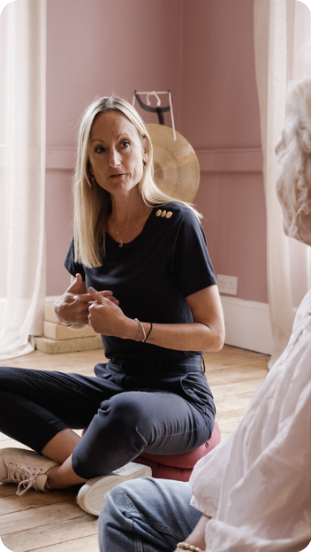
A woman seated on a cushion indoors gestures as she speaks to another about what is trauma. They are in a softly lit room with wooden floors, light pink walls, and a gong in the background.

Attachment-Based Therapy at Khiron Clinics

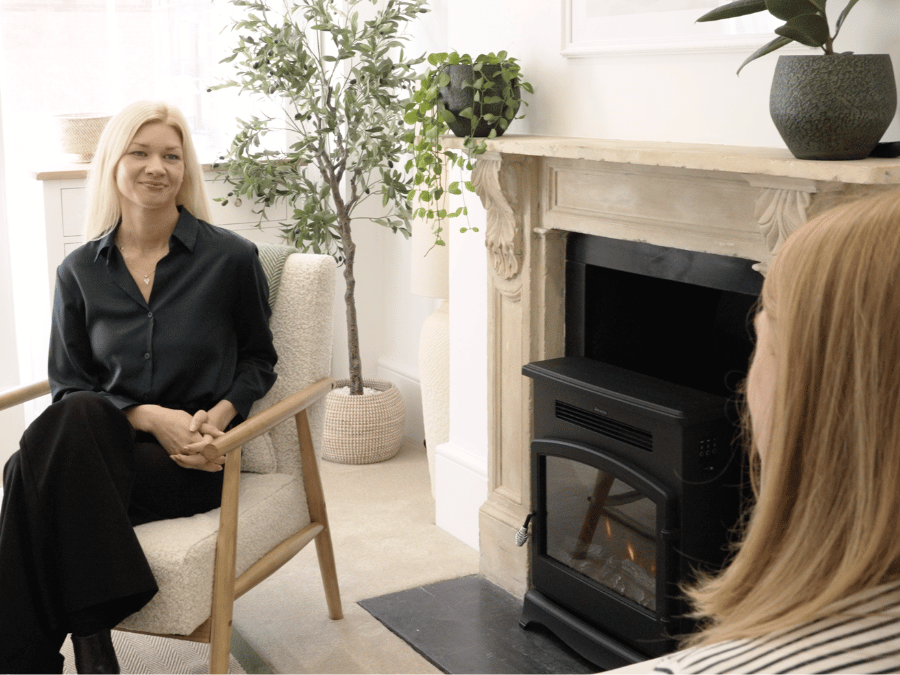
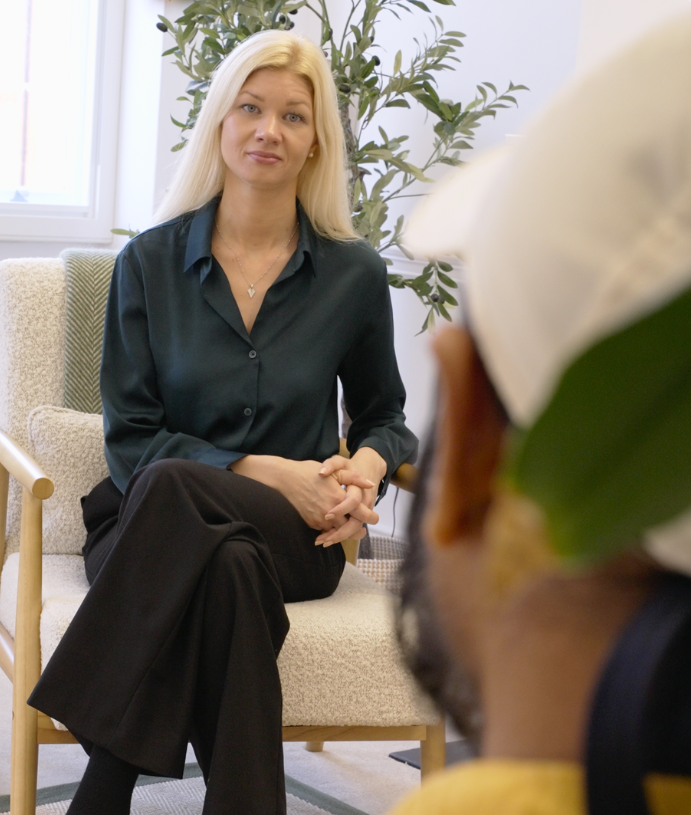
Two women sit facing each other, discussing what is trauma in a bright room with plants, a white fireplace, and neutral decor. One gestures as she speaks whilst the other listens attentively.

In-Person Attachment-Based Therapy near Harley Street, London

We deliver in-person attachment-based therapy at the London Day Clinic near Harley Street in central London, in a private, calm setting.

Online Attachment-Based Therapy

We offer secure online therapy as part of our outpatient pathway. The therapeutic relationship is the core of the work, and it translates well to video. Online sessions are available wherever you are, if you cannot attend in person.
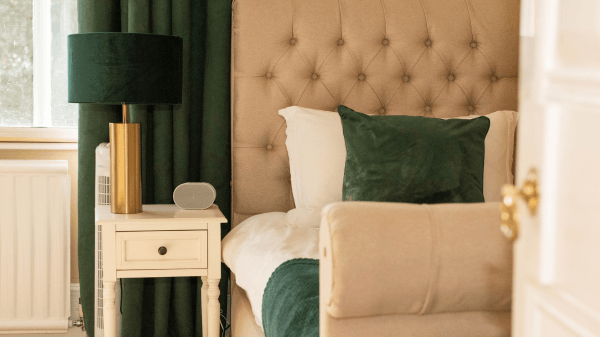
A cosy bedroom features a beige tufted headboard, white bedding with a green throw and pillow, a white bedside table with a modern black and gold lamp, and dark green curtains—creating a soothing retreat for anyone wondering what is trauma recovery.

Attachment-Based Therapy Inside Khiron Clinics' Residential Programme

Where your clinical picture calls for it, attachment-based work is delivered as part of the residential programme at Khiron Clinics' in Oxfordshire.
Why Choose Khiron Clinics for Attachment-Based Therapy in London

  • The world’s first Polyvagal Informed Certified residential clinic: Every part of the organisation, not only the therapy room, is built around how the nervous system responds to stress, trauma, and cues of safety.
  • Attachment trauma is core to Khiron Clinics, not a side interest: Our whole clinical model is built for relational and developmental trauma, the ground that attachment wounds grow from.
  • Recognised by renowned trauma experts: Our clinicians are trained, informed, and supervised by Dr Bessel Van Der Kolk, Dr Janina Fisher, Dr Stephen Porges, Dr Dick Schwartz, Deb Dana, Licia Sky and Linda Thai. Dr Janina Fisher has said, “There is only one programme that I can recommend and it is Khiron Clinics.”
  • A complete trauma recovery pathway: Attachment work connects to Sensorimotor Psychotherapy, IFS, EMDR, Somatic Experiencing, and residential care, so your treatment can adapt to what you need.
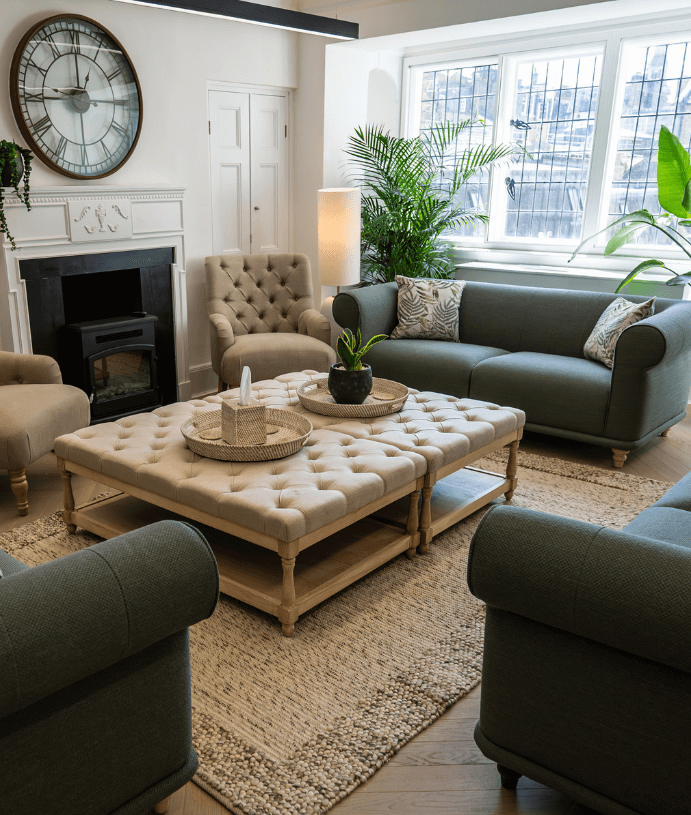
Calming space at Khiron Clinic's London Outpatient Trauma Clinic

Book Your Initial Consultation

Begin Attachment-Based Therapy at Khiron Clinics

An initial consultation with a lead clinician at our specialist trauma treatment clinics, khiron clinics

Every client who begins attachment-based therapy at Khiron Clinics first has an initial consultation. It is your chance to meet a senior member of our clinical team, share your story, learn more about our trauma-focused approach, and gain insight into the root causes of your symptoms.

Initial consultations take place at our clinic near Harley Street in London, or online, depending on what suits you.

Afterwards, you receive a written summary, a clinical formulation, and a treatment recommendation, so you can review everything at your own pace before deciding on next steps.

An initial consultation with a lead clinician at our specialist trauma treatment clinics, khiron clinics

Frequently Asked Questions

Yes. An attachment style is a pattern your nervous system learned, not a fixed trait, which means it can change with the right relational experience. In therapy, the steady, attuned relationship with a trauma-informed clinician gives your nervous system a different template to learn from. This is the basis of earned secure attachment, and it is possible at any age.

They are not the same thing, and the distinction matters. Attachment-based therapy is a gentle, collaborative, evidence-informed psychotherapy for adults that uses the therapeutic relationship as a secure base. The older “attachment therapy” referred to coercive practices used with children that have since been widely discredited. Nothing at Khiron Clinics involves force or restraint.

Yes. Because the work lives in the relationship between you and your therapist, it translates well to secure video sessions. Online attachment-based therapy suits many people who cannot attend in person. Whether in-person or online is the better fit for you is something your initial consultation helps clarify.

Attachment patterns form over years, so this is usually longer-term work rather than a short course. The pace depends on your history, what you are working with, and how your nervous system responds, and it is reviewed as therapy progresses. Real change comes not from speed but from the consistent, repeated experience of a relationship that feels safe.

Possible signs may include a fear of abandonment, difficulty trusting others even when they are reliable, discomfort with emotional closeness, pulling away as relationships deepen, or noticing repeated painful patterns in relationships. These are not character flaws. They are the ways a nervous system learned to stay safe when early closeness was unreliable or frightening.

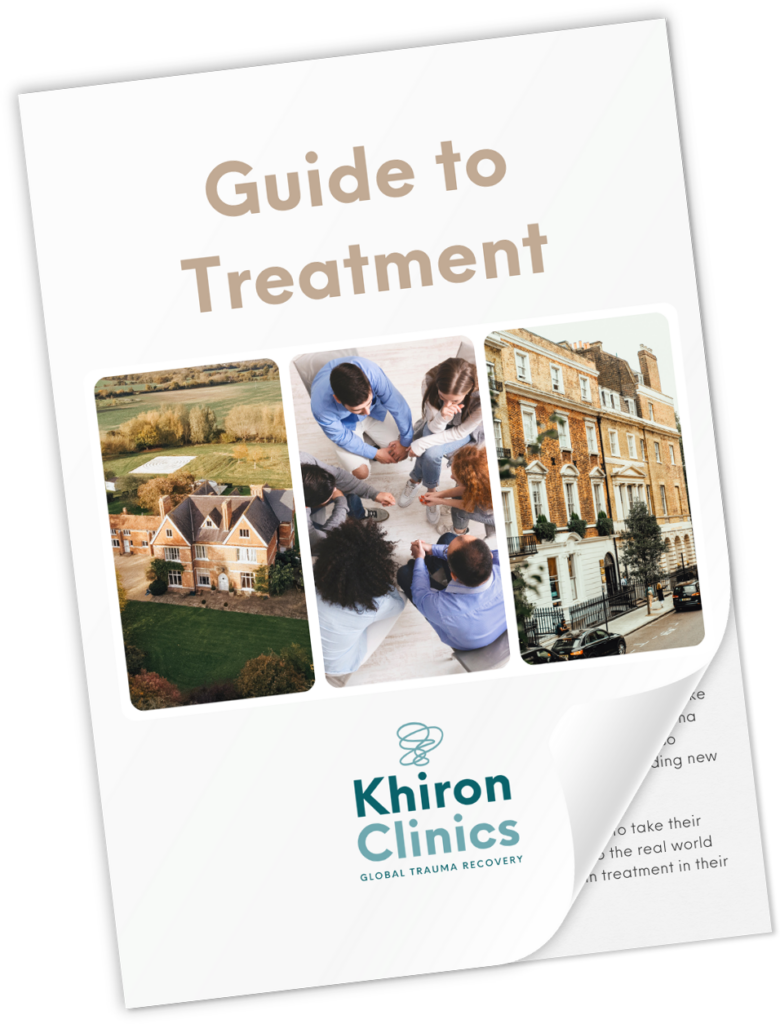
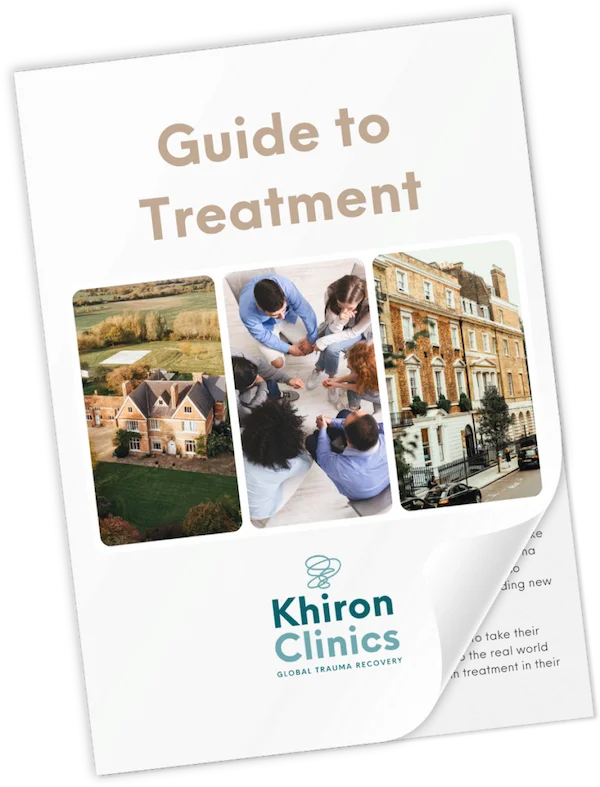
guide-to-treatment

Download the Brochure

Discover Our Innovative Trauma Recovery Pathway

Find out more about how we treat, what we treat, our clinics, pricing and more.

Next Steps

We Are Here to Help You Find the Path to Effective, Long Lasting Recovery.

An icon depicting a telephone receiver with a coiled cord, drawn in a minimalist style with blue lines. The receiver is positioned diagonally in an upwards orientation, reminiscent of the welcoming touchpoints often found at trauma clinics like Khiron Clinics.

Talk to Us

Get in touch with us and share your story if you feel comfortable with someone who will listen. Our team are always here to help.

Illustration of a desk calendar with spiral binding at the top. The calendar shows a grid of days with three rows, each row containing seven days. The design is simplistic and outlined in teal, evoking a sense of order and calm often emphasized in mental health treatment settings.

Book an Initial Consultation

Meet with a senior member of our clinical team and get insights into the root causes of your issues, plus a written summary and treatment recommendation.

A hand-drawn illustration of a folded newsletter or brochure. The cover features a rectangular image with a wave pattern above three horizontal lines of text, suggesting a simplistic design. The outline is in teal.

Download Our Brochure

Discover our innovative trauma recovery pathway. Find out more about how we treat, what we treat, our clinics, pricing and more.
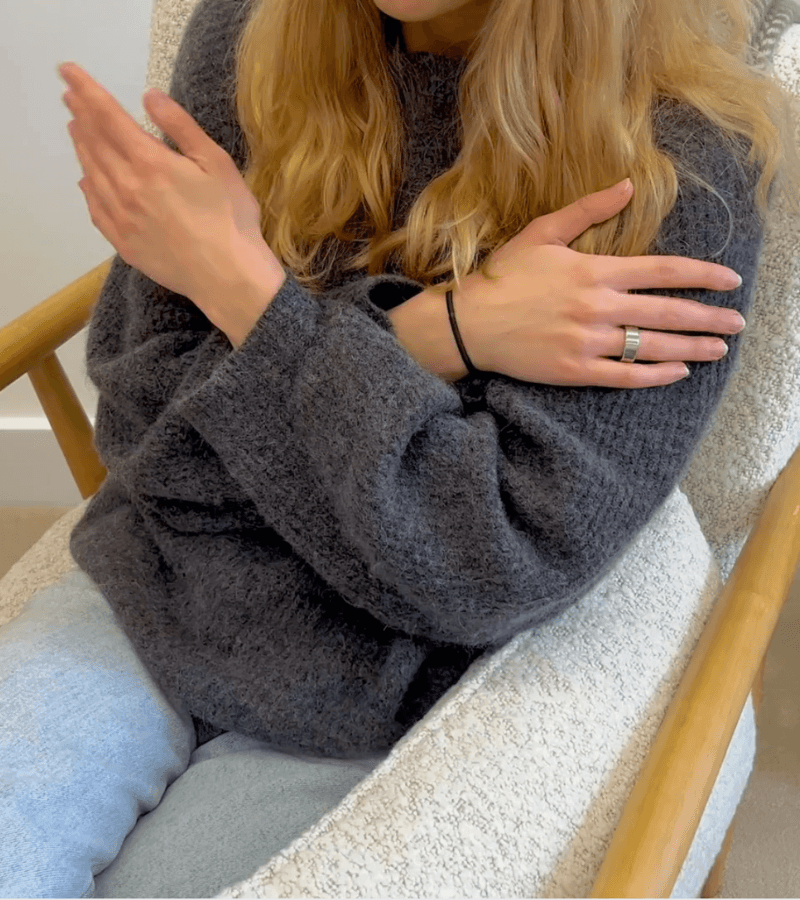
Bilateral stimulation, tapping with emdr therapy in london at khiron clinics
Khiron Mental Health Clinics Guide to treatment

Discover Our Innovative Trauma Recovery Pathway

Find out more about how we treat, what we treat, our clinics, pricing and more.

"*" indicates required fields

This field is for validation purposes and should be left unchanged.

Request A Call Back

Contact Us