
There are moments when the body reacts in ways that feel hard to explain. The heart speeds up, breathing changes, thoughts become scattered or overwhelming, and suddenly it can feel as though something is very wrong, even if nothing obvious is happening externally. For many people, this is where fear begins. Not just fear of what is happening, but fear of what it might mean. Anxiety and panic can feel deeply personal, even isolating, but they are also incredibly human experiences. They are not signs that something is “wrong” with you, but signs that your nervous system is doing its best to respond to perceived threat.
Anxiety and panic are closely related, but they are not the same. Anxiety tends to sit more quietly in the background, a kind of ongoing tension or anticipation. Panic is more sudden, more intense, and often more physical. Neither means you are losing control. And neither means you are unsafe in the way it can feel.
This article is for anyone who experiences recurring anxiety or panic, lives in high-pressure environments where stress feels constant, or has ever worried that what they are feeling might be something physically serious.
What is an Anxiety Attack?
“Anxiety attack” is not a formal clinical diagnosis, but it is a very real experience for many people.
The term is often used to describe a build-up of anxiety that gradually becomes difficult to manage. Unlike panic, which tends to come on suddenly, anxiety often develops over time through ongoing stress, emotional overwhelm, or a nervous system that has remained activated for too long, affecting both the mind and body. It is important to note though, that you may not be aware of the gradual build up of anxiety until it has become overwhelming.
Mentally, anxiety may show up as racing thoughts, overthinking, irritability, or a persistent sense of worry. Physically, it can present as muscle tension, chest tightness, digestive discomfort, headaches, fatigue, or difficulty relaxing fully.
What is important to understand is that anxiety is not “just in your head.” It is a nervous system response.
When the brain perceives threat or stress, the body automatically shifts into survival mode. Heart rate increases, breathing changes, muscles tense, and stress hormones like adrenaline are released. This response is designed to protect us from danger.
The difficulty is that the nervous system does not always distinguish between physical danger and emotional stress. Work pressure, conflict, uncertainty, trauma, burnout, or even certain thoughts can trigger the same response.
This is why anxiety can feel so physical and overwhelming, even when logically you know you are safe.
What is a Panic Attack?
A panic attack is typically more sudden, intense, and physically overwhelming. It is a rapid surge of fear and nervous system activation that often peaks within minutes. People commonly experience symptoms such as a racing heart, chest tightness, dizziness, shaking, nausea, shortness of breath, or a fear of losing control.
Although panic attacks can feel frightening, they are not generally dangerous. They are the result of the body’s fight-or-flight response becoming highly activated.
During panic, the nervous system behaves as though there is an immediate threat, even when no real danger is present.
For many people, panic can feel as though it comes “out of nowhere.” But often, the nervous system has already been under prolonged stress or operating in a heightened state of alert for some time beforehand.
Why Anxiety and Panic Feel So Physical
Anxiety and panic are deeply physical experiences because they involve the autonomic nervous system — the system responsible for regulating the body’s stress and survival responses.
When threat is detected, the brain activates the sympathetic nervous system, releasing adrenaline and cortisol. This increases alertness and prepares the body to respond quickly.
In short bursts, this response is helpful. But when the nervous system remains activated for long periods, people may begin to feel constantly “on edge”, emotionally overwhelmed, exhausted, or hyperaware of bodily sensations.
One of the most important things to understand is that the body reacts faster than the thinking mind. The nervous system is designed to prioritise survival, which means panic and anxiety responses can happen automatically before conscious awareness fully catches up.
Understanding this can often reduce some of the fear surrounding anxiety and panic. These symptoms are not signs that you are broken or losing control, they are signs of a nervous system trying to protect you, even if the alarm has become overactive.
The Fight-or-Flight Response Explained
The fight-or-flight response is one of the body’s oldest survival systems. Its role is simple: to detect danger quickly and prepare the body to respond. Thousands of years ago, this response helped humans survive immediate physical threats such as predators, injury, or unsafe environments.
Although modern life looks very different, the nervous system still works in much the same way. When the brain perceives threat, the amygdala, the brain’s threat detection centre, sends an immediate signal to activate the sympathetic nervous system. Stress hormones such as adrenaline and noradrenaline are released, triggering a cascade of physical changes throughout the body. Heart rate increases, breathing becomes faster and shallower, blood flow redirects toward the muscles to prepare for movement, muscles tense, digestion slows, and attention narrows. All of this is designed to help the body react quickly and survive danger.
The difficulty is that the nervous system does not only respond to physical threats. In everyday life, the same response can be triggered by stressful emails, work pressure, social situations, financial stress, conflict, overstimulation, uncertainty, or unresolved trauma. Sometimes the trigger is not external at all.
A physical sensation such as a skipped heartbeat, dizziness, chest tightness, or shortness of breath can itself become the trigger. Equally, certain emotions, memories, or even thoughts can activate the nervous system before the conscious mind fully understands why. This is because the brain responds to perceived threat rather than objective danger.
In the moment, the body often does not distinguish between something that is physically dangerous and something that feels unsafe, uncertain, or emotionally overwhelming, which is why anxiety and panic can feel so convincing physically even when part of you knows logically that you are safe.
The Role of Adrenaline
Adrenaline (epinephrine) and noradrenaline (norepinephrine) are the body’s main stress hormones, released as part of the fight-or-flight response. Their purpose is to prepare the body for immediate action when a threat is detected.
During anxiety or panic, these hormones increase heart rate and blood pressure, change breathing patterns, raise blood sugar for quick energy, and sharpen sensory awareness. This helps the body respond quickly to perceived danger.
In short bursts, this system is adaptive and protective. It becomes more problematic when it is activated frequently or when the nervous system struggles to return to baseline afterwards. Over time, this can leave the body feeling sensitised, with people experiencing persistent tension, fatigue, sleep disruption, and a stronger reaction to everyday stressors.
Although these adrenaline surges can feel alarming, they are not harmful. They reflect an activated nervous system rather than evidence of danger, which is why anxiety and panic are best understood as physical as well as psychological responses.
Why the Body Reacts Before the Mind
The body reacts before conscious thought because the brain uses two different pathways to process threat. The first is a fast, automatic route that sends information directly to the amygdala, the brain’s alarm system. This pathway prioritises speed over accuracy and can trigger a fight-or-flight response within milliseconds.
The second is a slower pathway that routes information to the prefrontal cortex, the thinking part of the brain, which evaluates what is happening and determines whether there is real danger.
Because the fast system activates first, the body can react before the mind has fully understood the situation. This is why panic can feel sudden or as though it appears “out of nowhere”, such as feeling light-headed on public transport or noticing a racing heart before consciously realising you are anxious.
Sometimes the trigger is external, but it can also be internal, such as a physical sensation, emotion, memory, or build-up of stress. The nervous system is constantly scanning for threat and can respond to subtle cues before they are consciously recognised, which is what makes these reactions feel so immediate and physically convincing.
What’s the Difference Between a Panic Attack and an Anxiety Attack?
Although the terms are often used interchangeably, panic attacks and anxiety attacks describe different patterns of experience within the nervous system.
Panic attacks tend to be abrupt in onset and escalate very quickly. They often peak within minutes and are marked by intense physical symptoms such as a racing heart, dizziness, chest tightness, breathlessness, trembling, nausea, and a strong sense of impending danger or loss of control. Because of how sudden and overwhelming they feel, panic attacks are often interpreted in the moment as something medically serious or life threatening, even when they are not dangerous.
Anxiety attacks, while not a formal clinical diagnosis, are commonly used to describe periods of heightened anxiety that develop more gradually. Rather than peaking suddenly, they tend to build over time in response to ongoing stress, worry, or nervous system overload. The experience may last much longer, sometimes hours or even days, and often feels like a sustained state of tension, restlessness, and emotional fatigue rather than an acute surge.
There is also a difference in intensity. Panic is typically more physically intense and frightening, with a strong sense that something catastrophic is happening. Anxiety, while still distressing, is usually less extreme in intensity but more persistent and draining over time. It can affect concentration, sleep, mood, and the ability to feel settled in the body.
Despite these differences, panic and anxiety are closely related and often overlap. Many people experience both, particularly during periods of prolonged stress or when the nervous system has become sensitised. Ongoing anxiety can create the conditions in which panic becomes more likely, and experiencing panic can in turn increase anticipatory anxiety about future episodes.
Because of this overlap, it is often more helpful to focus less on categorising the experience and more on understanding the underlying nervous system pattern. Both panic and anxiety reflect the same core process, a system that is designed to protect you, but which may have become overactive or more easily triggered.
From a clinical perspective, what matters most is not the label itself, but the impact on daily functioning, frequency of symptoms, and how much fear or restriction they are creating in a person’s life. Recognising this can be an important step towards seeking appropriate support and beginning to restore a greater sense of regulation and safety in the nervous system.
When Should You Seek Professional Support?
It can be difficult to know when anxiety or panic has reached the point where professional support would be helpful. In general, it is worth reaching out when symptoms are recurring, unpredictable, or beginning to affect your quality of life.
This may look like repeated panic or anxiety attacks, or a growing sense of fear about when they might happen. Many people also notice themselves avoiding certain situations, such as work, social events, travel, or public transport, because of worry about symptoms occurring.
Support is also important when anxiety or panic begins to interfere with sleep, concentration, relationships, or day-to-day functioning. Even if you are managing on the surface, feeling persistently overwhelmed or restricted by anxiety is a valid reason to seek help.
Treatment for Anxiety and Panic Attacks in London
At Khiron Clinics, treatment for anxiety and panic is based on a trauma-informed, medically led understanding of the nervous system and how it responds to stress and perceived threat.
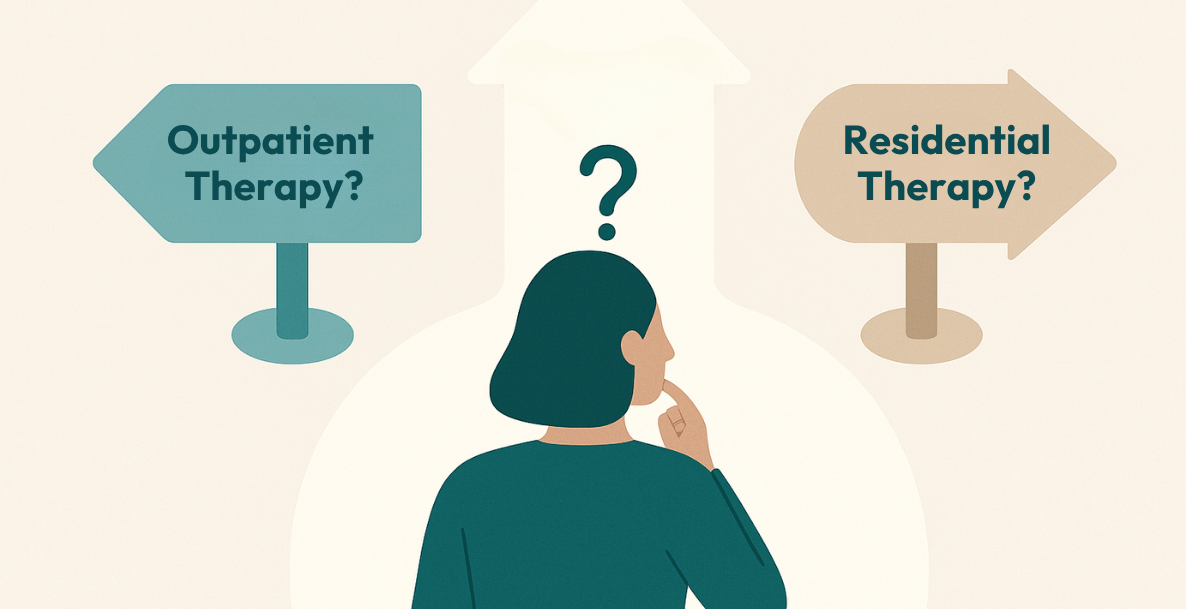
Outpatient Treatment Options
Outpatient care can include psychological therapies, psychiatric assessment, and medication when appropriate. Evidence-based approaches such as cognitive behavioural therapy are commonly used to help reduce symptoms, understand triggers, and support more stable nervous system regulation while continuing daily life.
Residential Treatment for Complex Anxiety
For more severe or complex presentations, residential treatment offers a more structured and contained environment. This can be helpful when symptoms are long-standing, significantly impairing functioning, or linked to complex trauma, allowing for more intensive therapeutic and medical support.
Trauma-Informed Care at Khiron Clinics
Khiron Clinics uses a trauma-informed approach, recognising that anxiety and panic are often connected to wider nervous system adaptations shaped by past experiences. Treatment focuses on both psychological and physiological regulation, supporting the body and mind to gradually move out of chronic threat states and towards greater stability and safety.
Can Anxiety and Panic Attacks Be Fully Recovered From?
Many people experience substantial improvement in anxiety and panic symptoms, and some achieve full remission, particularly with consistent, evidence-based treatment.
Recovery is often not linear. Symptoms may fluctuate, especially during periods of stress, but tend to become less intense, less frequent, and easier to manage over time.
Rather than aiming for complete absence of anxiety, recovery is often about restoring a sense of safety in the body and reducing the impact symptoms have on daily life. At Khiron Clinics, the focus is on helping people move beyond symptom management towards a more stable, connected, and functional way of living.
Frequently Asked Questions
How to tell if someone has severe anxiety?
Severe anxiety is usually defined by its impact on daily functioning rather than a single symptom. It may involve persistent worry, frequent physical symptoms such as tension, palpitations, or breathlessness, and difficulty carrying out everyday activities due to fear or overwhelm. People may also begin avoiding situations or relying heavily on reassurance or coping strategies to manage distress.
Why do I feel like I’m dying during a panic attack?
This feeling is a common feature of panic attacks and is driven by a sudden surge of the fight-or-flight response. Physical symptoms such as chest tightness, dizziness, breathlessness, and a racing heart can feel extremely intense and alarming. Although the experience feels life-threatening, it is not dangerous. It reflects a temporary activation of the nervous system rather than a medical emergency.
Can trauma cause panic attacks years later?
Yes. Trauma can lead to long-term changes in how the nervous system processes threat. Even years later, the body may continue to respond to certain triggers, including internal sensations, emotions, or reminders, as if they signal danger. This can result in panic attacks that appear long after the original traumatic experience.
How do I stop panic attacks naturally?
There is no instant way to stop panic attacks in the moment, but their frequency and intensity can reduce significantly over time. Evidence-based therapies such as CBT, trauma-focused therapy, and approaches that support nervous system regulation can all help. These focus on reducing sensitivity to triggers and helping the body return more easily to a calm state.
What is the fastest way to calm down from a panic attack?
The most effective immediate approach is to work with the body rather than against it. Slowing and steadying the breath, grounding attention in the present environment, and gently reminding yourself that the symptoms are temporary and not harmful can help the nervous system begin to settle. Panic peaks and then naturally reduces as the adrenaline response passes.
How long do anxiety and panic attacks last?
Panic attacks usually peak within minutes and often begin to subside within 10 to 30 minutes, although the physical after-effects can last longer. Anxiety attacks or periods of high anxiety can last much longer, sometimes hours or days, particularly when the nervous system remains in a heightened state of alertness or stress.