Holding Hope for Clients Who Have Lost It: A Conversation with Anja Frykegaard, Day Clinic Clinical Lead at Khiron Clinics
“You don’t have to hold the hope when you come in. We can hold it for you.”
Meet the Team is a new series inviting you behind the doors of Khiron Clinics. Here, we introduce the people who hold the therapeutic space each day, from lead clinicians to support workers to the team members who quietly help create safety in the environment around you.
We begin with Anja Frykegaard, Day Clinic Clinical Lead at Khiron Clinics. A BACP-accredited psychotherapist with a BSc in Psychology and a Master’s degree in Psychodynamic Psychotherapy, Anja combines extensive clinical training with a deep commitment to helping people genuinely heal, not just cope. She is a certified Neurofeedback Practitioner and a Somatic Experiencing Practitioner (SEP). Her integrative approach draws on Reichian Body Psychotherapy, Deep Brain Reprocessing, Internal Family Systems, EMDR, the Structural Dissociation Model, attachment theory, mindfulness practices, and trauma-informed breathwork, alongside her work in somatic embodiment and regulation.
But more than her qualifications, what stands out most is her conviction that people can evolve, even when they feel completely hopeless.
A Clinician Who Went Looking for Better Ways to Help People Heal
Anja’s path into trauma therapy was shaped by a powerful realisation early in her training. She noticed that while talking therapies could help people understand their experiences, they did not always offer a solution or help them fully resolve the impact those experiences had left in their bodies and nervous systems.
Rather than accept that limitation, she became curious. That curiosity turned into a professional quest to find approaches that could reach deeper, into the body, the nervous system, and the relational patterns shaped by early life experiences.
This kind of passion and insight is something we deeply value at Khiron Clinics. Many of our clinicians have gone on similar journeys, seeking out the most effective ways to support real, lasting change. It is this dedication to ongoing learning and innovation that helps set our treatment apart.
Today, Anja specialises in working with developmental trauma, loss, abuse, neglect, self-harm, identity issues, relationship difficulties, PTSD, and complex PTSD. Her approach is both creative and collaborative, always tailored to the individual in front of her. At the heart of her work is a belief in each person’s capacity to heal and grow, especially when they are met with safety, curiosity, and genuine connection.
Trauma Is Not Just What Happened. It’s What Happened in the Body
One of the biggest misunderstandings Anja encounters is the idea that trauma is only about major, obvious events.
“People often think trauma is an event. But trauma is what happens in the body in response to something.”
Two people can go through the same situation and have completely different responses. For one person, the nervous system may recover quickly. For another, the body may remain on high alert long after the situation has passed. Trauma is influenced by personal history, early relationships, available support, and how safe someone felt within their own body at the time.
This is why some of the most confusing trauma is not linked to a single dramatic incident, but to what did not happen. Experiences of neglect, emotional absence, or chronic misattunement can leave deep imprints, even when there is no clear event to point to.
“There is a lot of invisible trauma. It depends on your history, genetics, your early relationships, and the support you had around you. It is completely individual.”
Understanding trauma in this way can be deeply validating. It shifts the focus away from judging whether something was “bad enough” and instead recognises the reality of what the body has been carrying.
Working With the Body, Not Just the Story
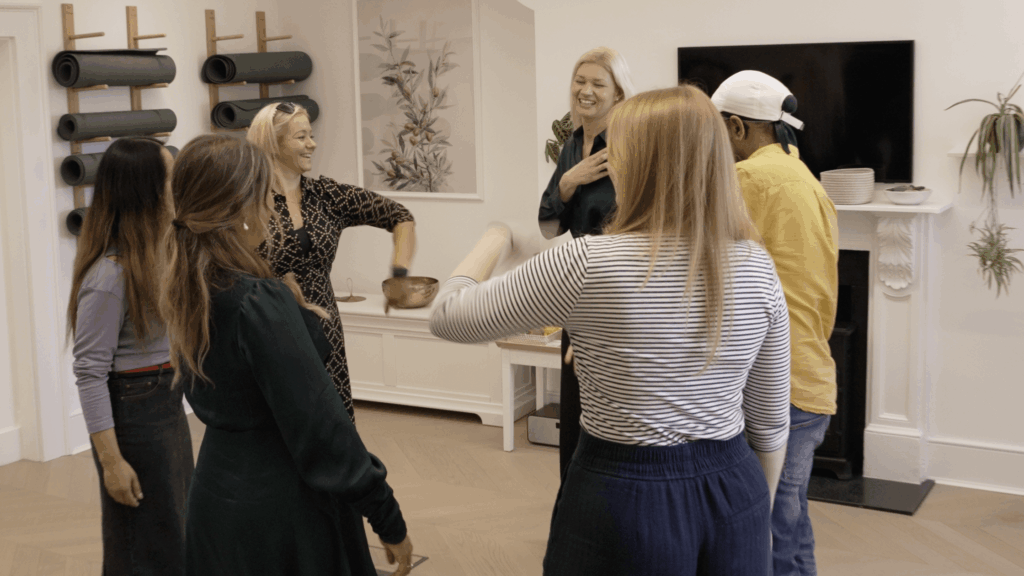
At Khiron Clinics, therapy is not centred on recounting every detail of the past. Instead, the focus is on what is happening in the body in the present moment.
“It doesn’t always matter why the response came up. We work with the response that is still stuck in the body itself and allow the body to work through it.”
In both individual sessions and group work, clients are encouraged to notice experiences that many people can relate to, sudden anger, deep loneliness, feeling overwhelmed, or shutting down. This allows therapy to move away from comparing stories and towards understanding shared nervous system responses.
Clinicians pay close attention to what sits beneath the words. Posture, tone of voice, breathing patterns, and expressions of shame or self-blame all offer important clues about how a client’s nervous system is responding. The first priority is always safety, safety in the therapeutic relationship and safety within the client’s own body. Only then does deeper trauma processing begin, followed by integration, where clients learn to recognise and regulate their own responses independently.
What Makes the Khiron Clinics Approach Different
Anja describes the Khiron model as a blend of established evidence-based therapies and newer body-oriented approaches grounded in emerging trauma research.
“We integrate body-based approaches with attachment and relational work, and we do it in community. We heal together.”
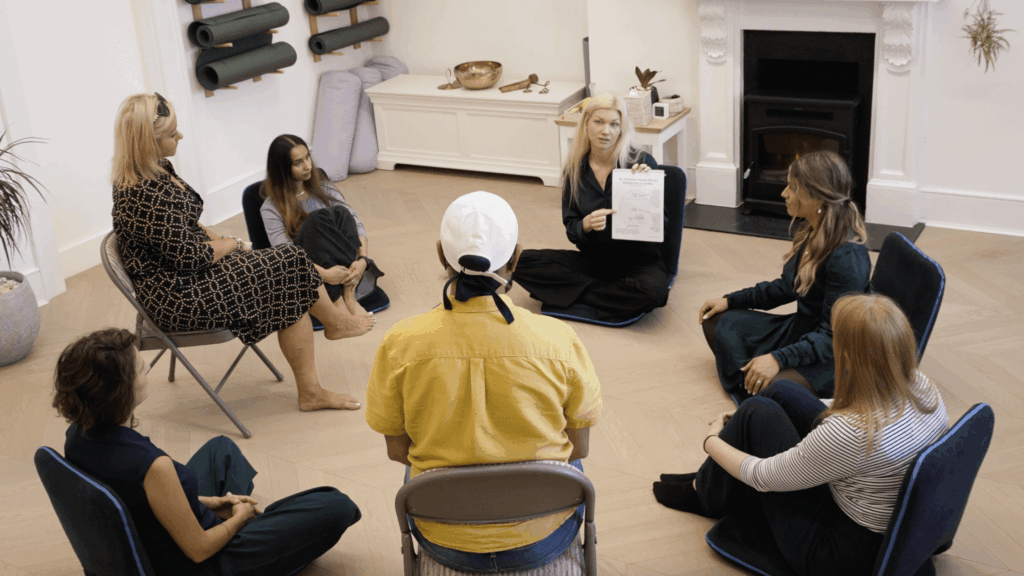
This integrative approach includes modalities such as EMDR, somatic therapies, Internal Family Systems, attachment-focused work, and polyvagal-informed practices, alongside community and group-based healing experiences. The aim is to create safety not only within the individual, but also within relationships and the wider therapeutic environment.
While research in trauma therapy continues to evolve, Anja notes that the changes she witnesses are often visible and tangible.
“You can see the change in posture, in the way people speak, in how they relate to the present moment. They are no longer stuck in the trauma response.”
From Hopelessness to Aliveness
Many clients who arrive at Khiron have already tried multiple services and treatments. They may feel exhausted, defeated, and unsure whether anything can truly help.
“They often come in quite hopeless, sometimes naming this as their last resort.”
In the early stages, this hopelessness is often visible in the body. Shoulders may collapse inward, eye contact can feel difficult, and there may be a sense of being withdrawn or checked out. Gradually, as safety builds and the nervous system begins to regulate, something starts to shift.
“I see them take up space. Their posture opens, they start smiling, laughing, joking. It is incredible to witness.”
These changes are not only emotional but deeply embodied. As trauma responses begin to settle, clients often rediscover parts of themselves that had long been hidden beneath survival strategies.
Rediscovering Strengths That Were Always There
Many people enter therapy believing they are not enough, not worthy, or a burden to others. Through relational experiences, group work, creative expression, and movement-based therapies, they begin to see themselves differently.
“They start to notice their strengths. They realise they are worthy, creative, funny, insightful. These qualities were always there, but hidden beneath survival.”
As clients learn to orient to the present rather than being pulled back into the past, their identity expands beyond coping mechanisms. They move from simply surviving to feeling more fully alive.
“When we tune into the now, we can discover our strengths, not just our survival skills.”
Small Practices That Can Help in Everyday Life
While deep healing is a gradual process, Anja often shares simple ways people can regulate their nervous system in daily life. One quick technique is to gently orient to the external environment, looking around the room and noticing colours, sounds, or textures to help the body register safety.
Breathing is another powerful and accessible tool. Slower nasal breathing can help settle a fight or flight response, while slightly more activating breaths can support people who feel numb or dissociated. These small shifts can help bring the nervous system back towards balance, where choice and clarity become more available again.
How Clinicians Stay Grounded While Holding So Much
Supporting trauma recovery requires strong support systems for clinicians as well. Anja emphasises the importance of her own movement and breathwork practices, connection to community, and regular supervision within the Khiron team.
“It is very important to be supported when you are supporting someone. You cannot pour from an empty cup.”
The clinic environment itself is designed with nervous system safety in mind, from calming visuals and natural elements to dedicated resourcing spaces where both staff and clients can regulate and reset when needed.
A Final Message for Anyone Struggling to Find Hope
For those who feel stuck or unsure whether change is possible, Anja’s message is simple but deeply reassuring.
“There is always capacity for growth. We are adaptable as human beings, and we can change at any age, wherever we start.”
Sometimes hope is not present at the beginning of therapy, and that is okay. Healing does not require people to arrive feeling optimistic or certain. It only requires a willingness to take the first step.
Sometimes people arrive without hope, and that is okay. Part of our role is to hold that hope until they begin to feel it for themselves.
Through safe relationships, body-based regulation, and compassionate, collaborative care, that hope often begins to return naturally over time. And when it does, people are frequently surprised to discover not a new version of themselves, but the one that was there all along, waiting to feel safe enough to emerge.