Intensive Trauma Treatment, Built Around Your Life
A flexible, trauma-informed day programme in London
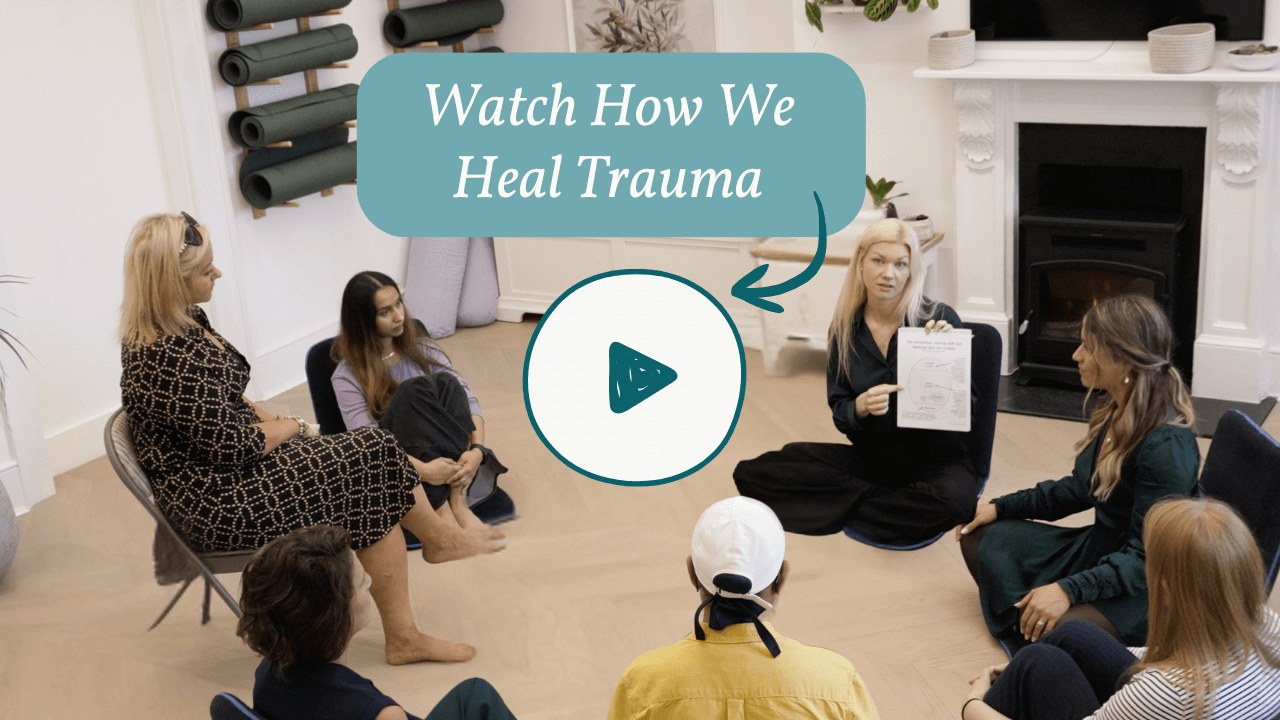
A groundbreaking intensive outpatient programme exploring how trauma shows up in your body, relationships, emotions and everyday life.
Each week explores a different area of life affected by trauma, with specialist therapies and individual clinical support.
Join for one intensive week or build a programme around your needs.
- Monday–Thursday
- Near Harley Street, London
- Attend 2–4 days a week
- Groups of no more than 8
“One of the world's leading trauma-treatment centres.”

Trauma can affect far more than our memories of what happened.
It can shape our relationships, boundaries, responses to conflict, ability to trust, how we feel in our bodies and how we see ourselves.
Khiron’s Day Clinic is designed around the areas of life where the effects of trauma are often felt most.
Treatment is organised around ten rolling therapeutic themes, allowing you to complete the full programme or focus on the areas most relevant to you.
There is no single way through the programme, because there is no single way trauma affects a life.
Flexible by design
One programme. Different ways to use it.
The Day Clinic has been designed to provide meaningful, intensive trauma treatment while allowing greater flexibility around your life and individual needs.
Step down from residential treatment
Moving from residential treatment back into everyday life can be a significant transition.
The Day Clinic provides a therapeutic bridge, allowing you to continue intensive treatment while returning to your relationships, responsibilities and everyday life.
Intensive treatment alongside everyday life
For those who need more support than weekly therapy can provide, the Day Clinic offers a more intensive level of trauma treatment while allowing you to remain connected to your home, relationships and everyday responsibilities.
Attend two, three or four days each week, depending on your clinical needs.
Join us for a particular therapeutic week
You don’t need to complete the full ten-week programme. Choose one or several themes that feel particularly relevant to you, with support from your clinician.
If you’re joining for a single standalone week, you’ll attend all four days to experience the full programme.
The programme
Ten themes exploring where trauma meets everyday life
The programme runs continuously through ten therapeutic themes.
For clients moving through the full programme, the themes follow a considered progression. We begin by building greater understanding of our internal world, before exploring relationships, communication and boundaries. The focus then widens to family, loss and our experiences within the world around us, before exploring safety, agency, identity and moving forward.
Every theme is explored through the body, relationships, therapeutic understanding and creative expression.
- You don't have to start at the beginning. Each week stands alone, so you can join the programme at the point that's right for you.
Understanding Yourself
Weeks 01–03
The Nervous System, Triggers & Somatic Regulation
Understand how trauma can shape your body's responses to stress, threat and safety.
Trauma doesn’t only affect what we think and remember. It can change the way our bodies and nervous systems respond to the world around us.
You might become overwhelmed quickly, shut down, feel constantly alert to what is happening around you, or experience physical responses that seem difficult to understand or control.
This week explores the connection between trauma, triggers, physical sensations, emotions and nervous system responses.
Through somatic practice, movement, psychoeducation, group therapy and creative work, you will have opportunities to become more curious about your own patterns and explore ways of responding to what happens within your body.
Understanding Your Parts & Internal Conflicts
Make sense of the conflicting parts of yourself and what they may be trying to protect.
Human beings are rarely completely consistent.
One part of us may desperately want connection while another wants to run away. We may understand something intellectually while finding ourselves responding completely differently in the moment. We might want change while simultaneously feeling terrified of it.
Trauma can make these internal conflicts particularly powerful.
This week explores fragmentation and the different “parts” of ourselves that may have developed ways of helping us survive, protect ourselves or maintain relationships.
Drawing on parts-based approaches to trauma treatment, the week creates space to approach these conflicting responses with curiosity and begin understanding what they may be trying to protect.
Shame, Self-Worth & the Inner Critic
Explore where shame and self-criticism come from, and the possibility of a different relationship with yourself.
Trauma can affect not only how we experience the world, but how we learn to see and speak to ourselves.
For some people, experiences of trauma can become intertwined with feelings of shame, inadequacy or a sense that something is fundamentally wrong with them. An inner voice may become highly critical, demanding or unforgiving.
This week explores shame, self-worth and the inner critic, including where some of these beliefs and ways of relating to ourselves may have come from.
Through the different elements of the programme, there is space to notice the language you use towards yourself, understand the protective role that self-criticism can sometimes play and explore the possibility of developing a different relationship with yourself.
Relationships & Repair
Weeks 04–06
Attachment, Intimacy & Relational Trauma
Explore how early relationships can shape trust, closeness and intimacy today.
Our experiences of relationships, particularly our earliest ones, can influence how we experience closeness throughout our lives.
Trauma can affect trust, intimacy, vulnerability, dependence, rejection and our expectations of what will happen when we allow another person to get close.
This week explores attachment wounds, relational trauma and the patterns that can emerge within our relationships.
Within the therapeutic group, there are opportunities not only to understand these patterns intellectually, but to become curious about how they may appear in real relationships with other people.
Communication, Conflict & Repair
Practise expressing needs, navigating difficult conversations and repairing after rupture.
Trauma can make moments of conflict or disconnection feel particularly threatening.
We might withdraw, become defensive, struggle to express what we need, feel overwhelmed by another person’s response, or find ourselves repeating familiar patterns during difficult conversations.
This week explores what happens when communication becomes difficult and how we experience disagreement, conflict and disconnection.
Throughout the programme, clients learn and practise Khiron’s communication model, with opportunities to explore expressing needs, listening, navigating difficult conversations and what it can mean to repair a relationship after rupture.
Boundaries, Needs & Finding Your Voice
Recognise your needs, set boundaries and stay connected to yourself around others.
For many people who have experienced trauma, recognising what we need is not always straightforward.
We may find ourselves automatically saying yes, prioritising other people’s feelings, avoiding disagreement, struggling to ask for help or feeling responsible for keeping everybody around us happy.
Sometimes we don’t realise a boundary has been crossed until long after it has happened.
This week explores boundaries alongside needs, responsibility, people pleasing and self-expression.
Within a supported therapeutic environment, there are opportunities to explore what it feels like to recognise your needs, communicate them and remain connected to yourself while in relationship with others.
Your Life & Relationships in Context
Weeks 07–08
Family, Co-dependency & Relationship Roles
Understand family systems, co-dependency and the roles you take on around other people.
Our experiences of relationships, particularly our earliest ones, can influence how we experience closeness throughout our lives.
Trauma can affect trust, intimacy, vulnerability, dependence, rejection and our expectations of what will happen when we allow another person to get close.
This week explores attachment wounds, relational trauma and the patterns that can emerge within our relationships.
Within the therapeutic group, there are opportunities not only to understand these patterns intellectually, but to become curious about how they may appear in real relationships with other people.
Grief, Loss & Life Transitions
Make space for grief and loss in their many forms, including changes you have chosen.
Grief is not limited to bereavement.
We can grieve relationships, childhoods, opportunities, identities, health, safety and versions of our lives that did not happen. Trauma itself can involve profound experiences of loss.
Change can also bring grief, even when the change is something we have chosen.
This week provides space to explore grief and loss in their many forms, alongside the complex emotions and experiences that can accompany significant transitions in our lives.
Reclaiming & Integrating
Weeks 09–10
Reclaiming Safety, Choice & Trust
Explore what safety can mean after trauma, and rebuild trust, choice and agency.
One of the most profound effects of trauma can be a loss of safety.
The world may feel unpredictable, our bodies may continue to anticipate threat, trusting other people can feel difficult, and choices that appear straightforward from the outside can feel complicated by fear or previous experiences.
Trauma can also leave us feeling as though things happen to us, rather than experiencing ourselves as active participants in our own lives.
This week explores what safety means after trauma, not as an expectation that we will always feel safe, but as something we can begin to recognise, experience and build.
We explore trust in ourselves and others, choice, agency and the experience of having a voice in what happens next.
The focus is not on removing fear or vulnerability, but on exploring what it can mean to have greater choice in how we respond to them.
Identity, Context & Moving Forward
Explore identity and belonging, and how a meaningful life can continue to grow around what you carry.
Trauma happens within the context of a life.
Our families, relationships, culture, identity, communities and wider social experiences can all influence both what we experience and how we make sense of it.
Trauma can also affect how we imagine our future, connect with other people and understand our place in the world.
This week explores identity, belonging, culture and the wider context of our experiences, alongside what it might mean to continue building a meaningful life while acknowledging what we carry with us.
That might involve exploring work, relationships, community, creativity, purpose, new experiences or connections that have previously felt difficult to imagine.
The focus isn’t on leaving trauma behind.
It is on exploring how a life can continue to grow around it.
You don't need to decide before speaking to us
The first step is an initial consultation with one of our senior trauma clinicians, either online or in person at our London Day Clinic.
Your day at the clinic
A consistent structure, with a different focus each week
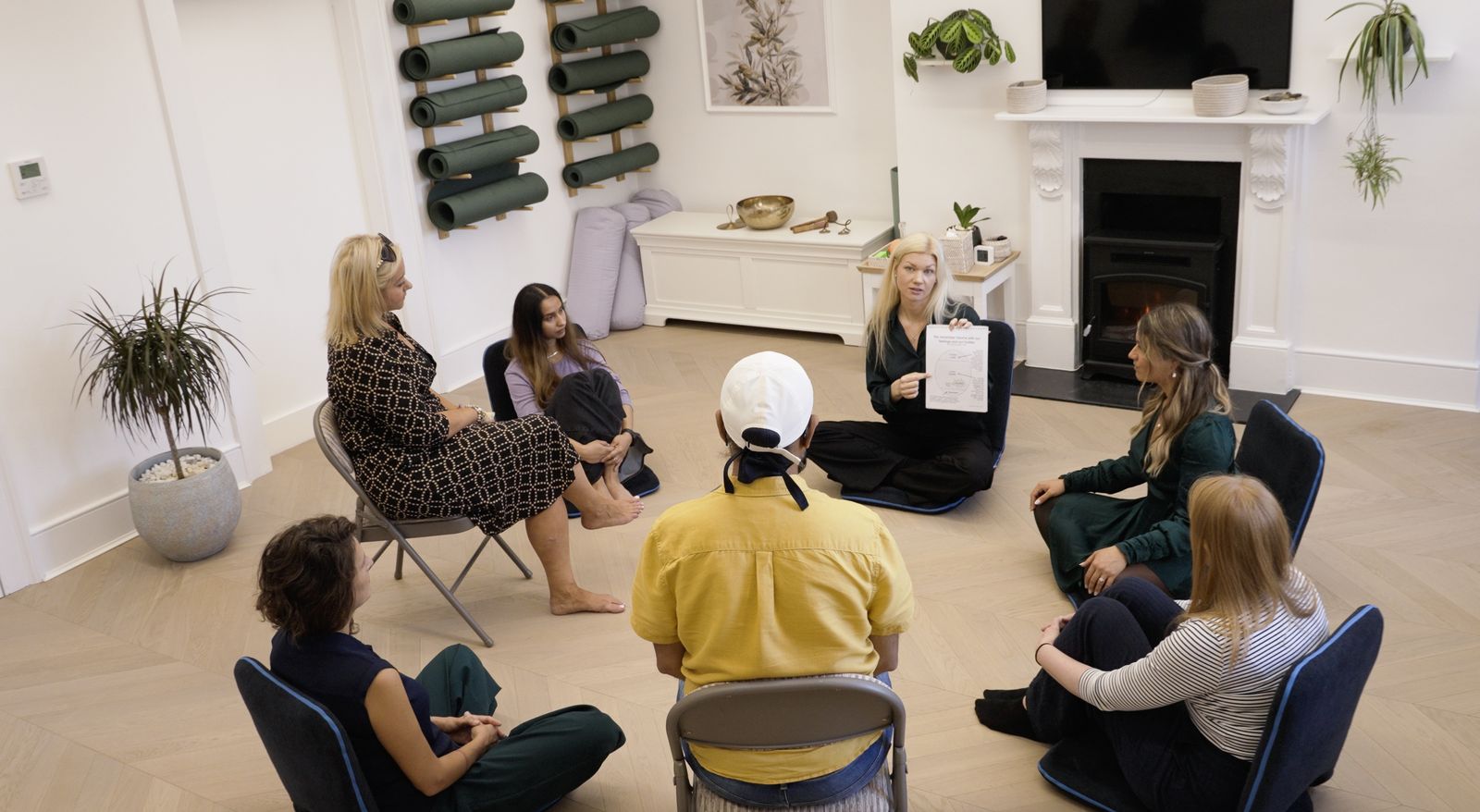
Although the therapeutic theme changes each week, the structure of your days remains consistent. This predictability is intentional.
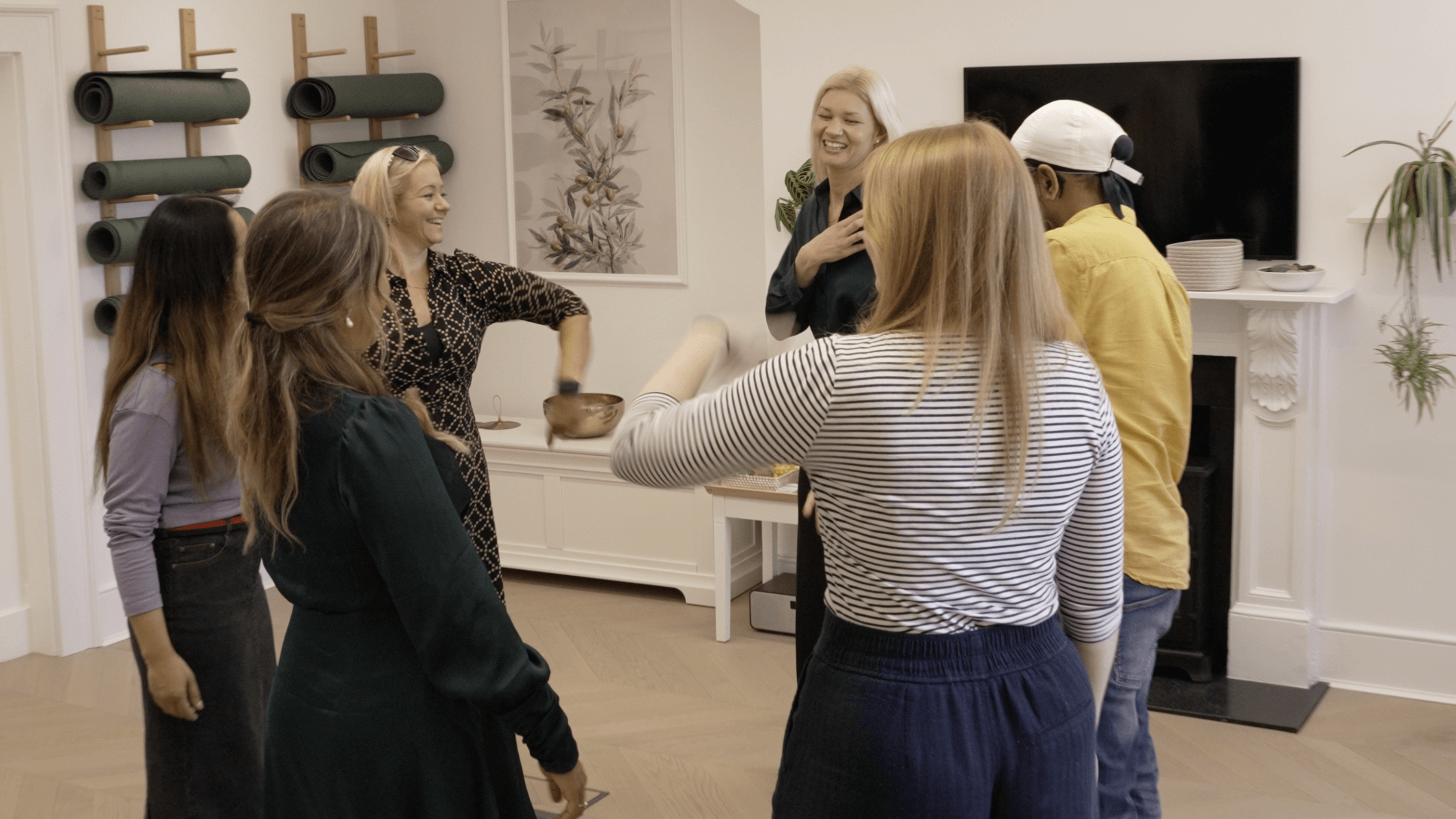
Each group approaches the week’s theme from a different direction, giving you opportunities to explore it physically, relationally, intellectually and creatively rather than relying on talking alone.
10:00–11:00 Movement & Somatic Group
Explore the week’s theme through gentle movement, body awareness and somatic practice.
11:30–12:30 Process Group
A supported therapeutic space to explore the week’s theme through reflection, connection and shared experience.
13:30–14:30 Psychoeducational Group
Explore key trauma concepts and therapeutic perspectives to help you better understand your experiences.
15:00–16:00 Creative & Experiential Group
One-to-one support
Individual therapy alongside the group programme
Individual sessions provide a private space alongside the group programme. They give you an opportunity to explore what is emerging for you, bring attention to experiences you may not want to discuss within the group and receive additional support from a specialist trauma clinician throughout your treatment.
Attend 2 or 3 days per week
Includes one individual session each week.
Attend all 4 days
Includes two individual sessions each week.
If you are joining us for a single standalone themed week, you will attend the full four-day programme.
During your initial consultation, your clinician will recommend the number of weeks and days per week that may be most appropriate for you, based on your individual needs and what you hope to get from the programme.
Our approach
Four foundations running through everything we do
Although the therapeutic theme changes, four foundations remain at the heart of Khiron’s approach.
Somatic
Trauma affects the body as well as the mind. Somatic approaches allow us to work with physical sensations, responses and patterns alongside thoughts and emotions.
Parts
Parts-based approaches provide a way of understanding apparently conflicting thoughts, feelings and behaviours, including the protective functions they may have developed.
Mindfulness
Mindfulness and awareness practices provide opportunities to notice what is happening internally without immediately needing to change, suppress or escape it.
Polyvagal-informed
Understanding the nervous system provides another lens through which we can make sense of our responses to threat, connection and safety.
Rather than existing as four separate modules, these foundations are woven throughout every week of the programme.

Clinical heritage
Trauma treatment shaped by decades of clinical learning
Khiron’s approach has developed through years of specialising in trauma treatment. Our clinical practice, training and supervision have been guided personally by some of the world’s leading thinkers and practitioners in trauma, attachment, somatic psychology and parts-based treatment, including Bessel van der Kolk, Stephen Porges, Janina Fisher and Richard Schwartz.
Their work has helped transform our understanding of trauma, recognising that its effects can extend far beyond memories and thoughts into the nervous system, body, relationships and our sense of self. The Day Clinic brings these perspectives together within one intensive programme.
A small cohort, by design
Small groups. Specialist clinicians. A therapeutic community.
The Day Clinic operates with a small cohort of no more than eight clients. This is intentional.
Trauma often happens in relationship, which means relationships can also become an important part of therapeutic work. The group provides opportunities for connection, communication, boundaries, vulnerability, disagreement and repair to be explored within a professionally supported environment.
For clients attending over multiple weeks, the therapeutic community can also provide continuity while they begin applying their work within everyday life.
What Our Clients Have to Say
“The trauma focused approach has helped me understand myself better than any formal psychiatric diagnosis or any specialist NHS therapy I've ever received.“ - Victoria
I spent 4 weeks at Khiron, the layered therapies, whilst intense, made me feel safe and validated. I didn’t think it was possible but my future and growth in incomparable.I have my spirit and hope back.
Khiron changed my life. I don’t think I would be alive if I didn’t find Khiron. The therapists are all phenomenal.
Khiron House is quite simply unique. Therapists are amazing their care, commitment and expertise is unsurpassed.
Coming from outside London?
You don’t need to live in London to access the programme. Our rolling themed weeks make it possible to travel to London for a particular intensive week or stay for several weeks of treatment.
We help you arrange somewhere suitable to stay while attending the programme, taking some of the practical pressure out of organising treatment away from home. Our admissions team will work with you throughout the process.
Next steps
Where do I start?
You don’t need to decide which weeks you need before speaking to us.
The first step is an initial consultation with one of our senior trauma clinicians, either online or in person at our London Day Clinic. This gives you time to share your story, talk about what you are currently struggling with and explore your hopes and goals for the future. Together, we can consider whether the Day Clinic is appropriate for you and what treatment might look like.
And if another level of care would better meet your needs, we can talk about that too.
You don't need to know exactly what you need before you contact us. That's what the initial consultation is for.
Consultations take place online or in person at our clinic near Harley Street, London.
Book an initial consultation
"*" indicates required fields
Prefer to talk it through? Speak to our Admissions Team — +44 (20) 3668 1606